
Our People
We bring different perspectives to the table, but we’re united by a love for purposeful work, thoughtful design, and real connection.
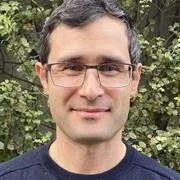
Research interests:
Complex networks
Dynamical systems
Dynamical networks
Control systems
Graph theory
Social networks analysis and mining
Machine learning applications
Director, RMIT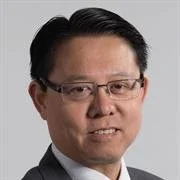
Distinguished Professor Xinghuo Yu specialises in electrical and electronic engineering, and he is passionate about making an impact through his fundamental and applied research.
He is a Fellow of the Australian Academy of Science, an Honorary Fellow of Engineers Australia, and a Fellow of the IEEE, International Federation of Automatic Control (IFAC), Australian Computer Society (ACS), and Australian Institute of Company Directors (AICD).
He is an Associate Deputy Vice-Chancellor and the Chair of RMIT Professorial Academy. He is a Vice-Chancellor's Professorial Fellow in the School of Engineering. He was the President of IEEE Industrial Electronics Society for 2018 and 2019.
Deputy Director, RMIT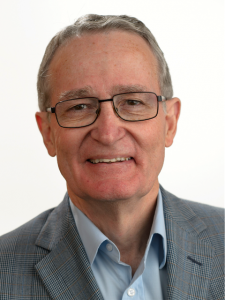
Node Lead, Monash UniversityDavid J. Hill received the PhD degree in Electrical Engineering from the University of Newcastle, Australia, in 1976 followed by postdoctoral research at The University of California, Berkeley 1978-1980. Since 2022, he holds the position of Professor of Electrical Power and Energy Systems at Monash University, Melbourne, Australia. He is also Professor Emeritus at The University of Sydney.
His research activities have been in energy and power systems, control, networks and stability analysis. His work is now mainly focussed on issues for future energy and power networks with the aim to bring science to accelerate the clean energy transition.
Professor Hill is a Life Fellow of the Institute of Electrical and Electronics Engineers, USA. He is a Fellow of the Society for Industrial and Applied Mathematics, USA, the International Federation of Automatic Control, the Asian Control Association, the Australian Academy of Science and the Australian Academy of Technological Sciences and Engineering. He is also a Foreign Member of the Royal Swedish Academy of Engineering Sciences. He received the 2021 IEEE Power and Energy Society Prabha S. Kundur Power System Dynamics and Control Award and the 2022 IEEE Control System Society Hendrik W. Bode Lecture Prize.
Node Lead, the University of Western AustraliaI am interested in complex systems and how understanding of complexity can help solve real engineering and social problems. My undergraduate degree was in pure mathematics (with an honours dissertation in the history of mathematics) and my graduate degree was in applied mathematics (in nonlinear dynamical systems and nonlinear time series analysis). From 2001 I worked as a researcher and lecturer in the Electronic and Information Engineering Department of Hong Kong Polytechnic University. In 2011, I was awarded a professorial Future Fellowship from the Australian Research Council and took up a position with the School of Mathematics and Statistics, at UWA.
Since 2016 I have held the CSIRO-UWA Chair in Complex Systems and have appointments at both UWA (Faculty of Engineering and Mathematical Sciences) and CSIRO (Mineral Resources).
My academic duties include the position of Editor-in-Chief of the journal Chaos (the leading journal within my discipline) and Main Editor of the journal Physica A.
My research is focussed on fundamental advances and applications in the area of complex systems and dynamical systems theory.
Chief Investigator, RMIT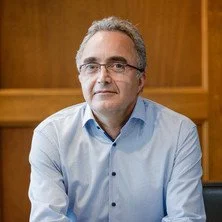
Node Lead, Queensland University of TechnologyProf Firuz Zare is the Head of School of Electrical Engineering and Robotics and has spent over 30 years in three main organisations - academia, industry and international standardisation committees as a leader, project manager and senior specialist. He has team-building, management and leadership experience in emerging and multidisciplinary research and teaching activities, cross-institutional research and technology projects and national and international standardisation committees.
His core research areas are:
Advanced Power Converter Topology and Control in Grid Connected Renewable Energy, Motor Drives and Energy Storage Systems
Electromagnetic Interferences and Harmonics in Power Systems
Addressing Standardisation and Emerging Issues of Future Grids
Pulsed Power Systems for Bioelectrics and Industrial Applications
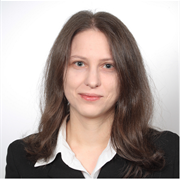
Associate Professor Zsuzsanna Csereklyei is an economist focusing on energy transitions, electricity markets and on the adoption of efficient technologies.
Zsuzsanna's work includes publications in the Energy Journal, Energy Economics, Ecological Economics, Journal of Econometrics, Energy Policy, Utilities Policy, Applied Energy and the Journal of Energy Storage. Her current research includes several projects in the field of energy transitions, including energy profile forecasting, electricity market design, transport electrification, and projects on the future role of electricity storage.
Zsuzsanna has taught several courses in Macroeconomics (WU Vienna, RMIT), Energy Policy, Political Economy (LMU Munich), Econometrics (RMIT) and been awarded the Award of Excellence for her thesis by the Austrian Ministry of Science and Research, given for the best dissertations in the country. She has also worked for over eight years in leading management positions in industry and in consulting.
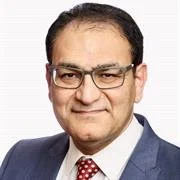
Chief Investigator, RMITAssociate Professor Hamid Khayyam earned his B.Sc. (Hons.) from the University of Isfahan, his M.Sc. from the Iran University of Science and Technology, and his Ph.D. from Deakin University. With over a decade of experience in automation and energy productivity across various industrial companies, Dr. Khayyam previously led efforts at Deakin University on modeling, control, and optimization of energy systems for the carbon fiber production line at Carbon Nexus.
Currently, Dr. Khayyam is an Associate Professor in the School of Engineering at RMIT University. He has made significant scholarly contributions, including over 130 articles published in professional journals and conferences, 4 books as sole editor, 10 book chapters, and editorial or reviewer roles for more than 400 journal papers. Dr. Khayyam also serves on the editorial boards of several Q1-ISI journals. His research focuses on developing innovative technologies that integrate Artificial Intelligence and Machine Learning to address complex systems, creating simplified and procedural solutions for end-users.

Chief Investigator, RMITDr. Mahdokht Shaibani is an Associate Professor at the Department of Chemical Engineering, RMIT University. She has secured over $23 million in research funding from diverse funding bodies, including government and industry, both nationally and internationally. Her expertise includes developing green energy storage and recycling/repurposing solutions to combat climate change. Specifically, her research interests are synthesis and scale up of carbon materials, lithium–sulfur batteries, silicon anodes, flow batteries, liquid metal batteries, supercapacitors, lithium-ion capacitors, recycling and repurposing of end of life batteries and solar panels, powder technology and particulate materials
With high-impact publications in journals like Science Advances, ACS Nano, and Nature Communications, Dr. Shaibani's pioneering research in lithium metal-based energy storage technologies has established her as a key innovator, resulting in the filing of eleven patents. She received the 2021 L’Oréal–UNESCO For Women in Science Fellowship and the 2022 Victorian Young Tall Poppy Scientist award.
Dr. Shaibani is passionate about science communication, translating complex concepts into accessible content featured in several outlets, including The Conversation, Australian Financial Review, and Women's Agenda. She has co-supervised five PhD students to completion, mentored two postdoctoral Research Fellows, and currently supervises ten PhD students.

Chief Investigator, RMITA-Prof Porteouss research interests are Artificial Intelligence and Image Processing
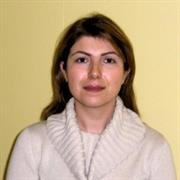
Chief Investigator, RMITDr Sara Mordipour is an expert in traffic engineering and transportation modelling.
She works in the areas of driving behaviour modelling and analysis, road freight management, transport infrastructure maintenance planning and management, transport network modelling and simulation, and road safety.
Leadership Awards and Scholarships:
Veski Inspiring Women in STEM Sidebyside Leadership Award, 2023.
The School of Engineering at RMIT University Leadership Award, 2021.
Position for Wattle Program for Academic Leaders, 2021.
Scholarship for Advanced Leadership Program for Higher Education, 2018.
The Executive Ready Leadership Scholarship for Women, 2016.
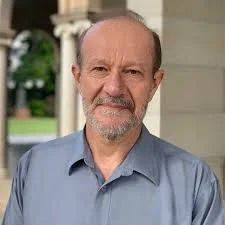
Chief Investigator, QUTAreas of Expertise
Building Information Modelling
Parametric Geometry Modelling
IT Systems to support building design and construction
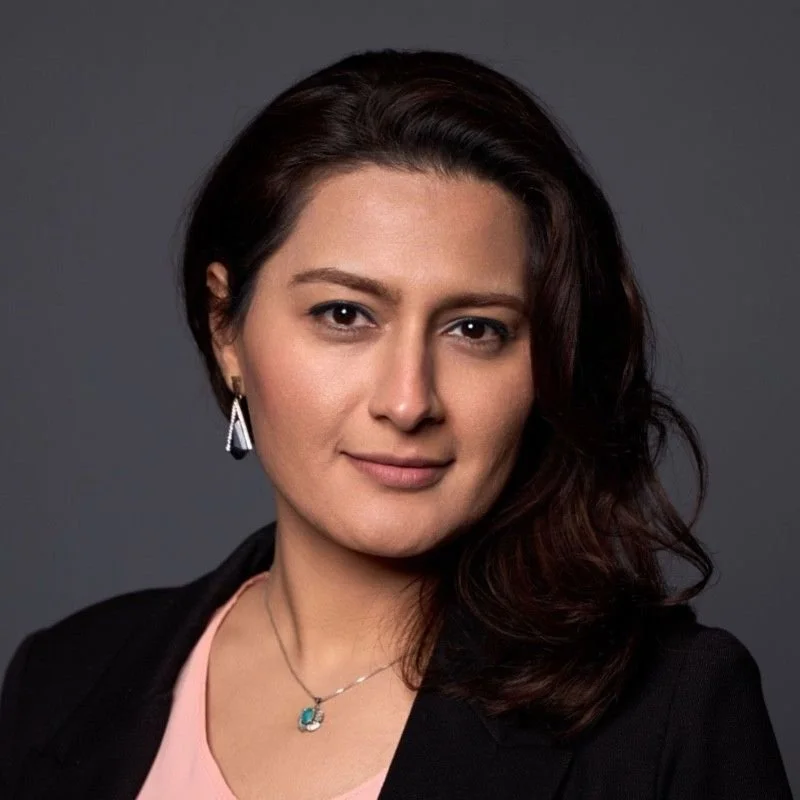
Chief Investigator, QUTMaryam Haghighat is a senior lecturer at the QUT School of Electrical Engineering and Robotics. She actively researches across machine learning and computer vision with applications in robotics, healthcare, and remote sensing.
Maryam received her PhD from the UNSW School of Electrical Engineering and Telecommunications, Australia. Her doctoral research in image processing at the Interactive Visual Media Processing lab was recognised by the 2020 UNSW Award for Outstanding Doctoral Thesis.
Following her PhD, Maryam joined the Big Data Institute (BDI), Department of Engineering Science, University of Oxford, UK, as a postdoctoral researcher from 2020 to 2022. During her time at Oxford, she contributed to the PathLAKE project funded by InnovateUK, leading the development of machine learning algorithms for medical image analysis.
In 2022, she conducted research jointly across the CSIRO Machine Learning and Artificial Intelligence Future Science Platform, the Mineral Resources and Data61 Research Units in hyperspectral deep learning.
Chief Investigator, MonashI received my PhD degree from the École Polytechnique Fédérale de Lausanne (EPFL), Lausanne, Switzerland, in 2016. From April 2016 to October 2017, I was a Postdoctoral Fellow at EPFL.
I have been the recipient of the Distinguished Ph.D. Thesis Award of EPFL, Best Paper Award of the IEEE Transactions on Electromagnetic Compatibility, Basil Papadias Best Paper Award at the IEEE PowerTech conference in 2013, and the Best Paper Award at the ASAIEM conference in 2017. My work on the Electromagnetic Time Reversal has led to a commercialised patent.
My current research interests include smart grids, distributed energy resources, electric vehicles, and integration of renewable energy resources in power networks.
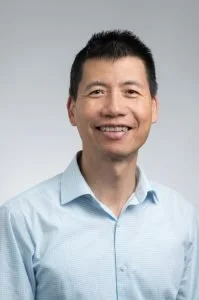
Chief Investigator, MonashHai L. Vu is a Professor and the recipient of the Australian Research Council (ARC) Future Fellow Award (2012-2016) in the area of Intelligent Transport Systems (ITS). He joined Monash University in 2016 to lead the ITS research. Prior to that, he spent 5 years at the University of Melbourne and 11 years at Swinburne University of Technology where he has had established and led the Intelligent Transport Systems Lab in a joint partnership with VicRoads. He has over 25 years experience as an academic and researcher.